
La Paz, Bolivia: The Highest Capital City in the World
Brave extreme altitude in La Paz to explore the Witches Market, taste Bolivian cuisine, wander the ruins of Tiwanaku, and cruise on Lake Titicaca.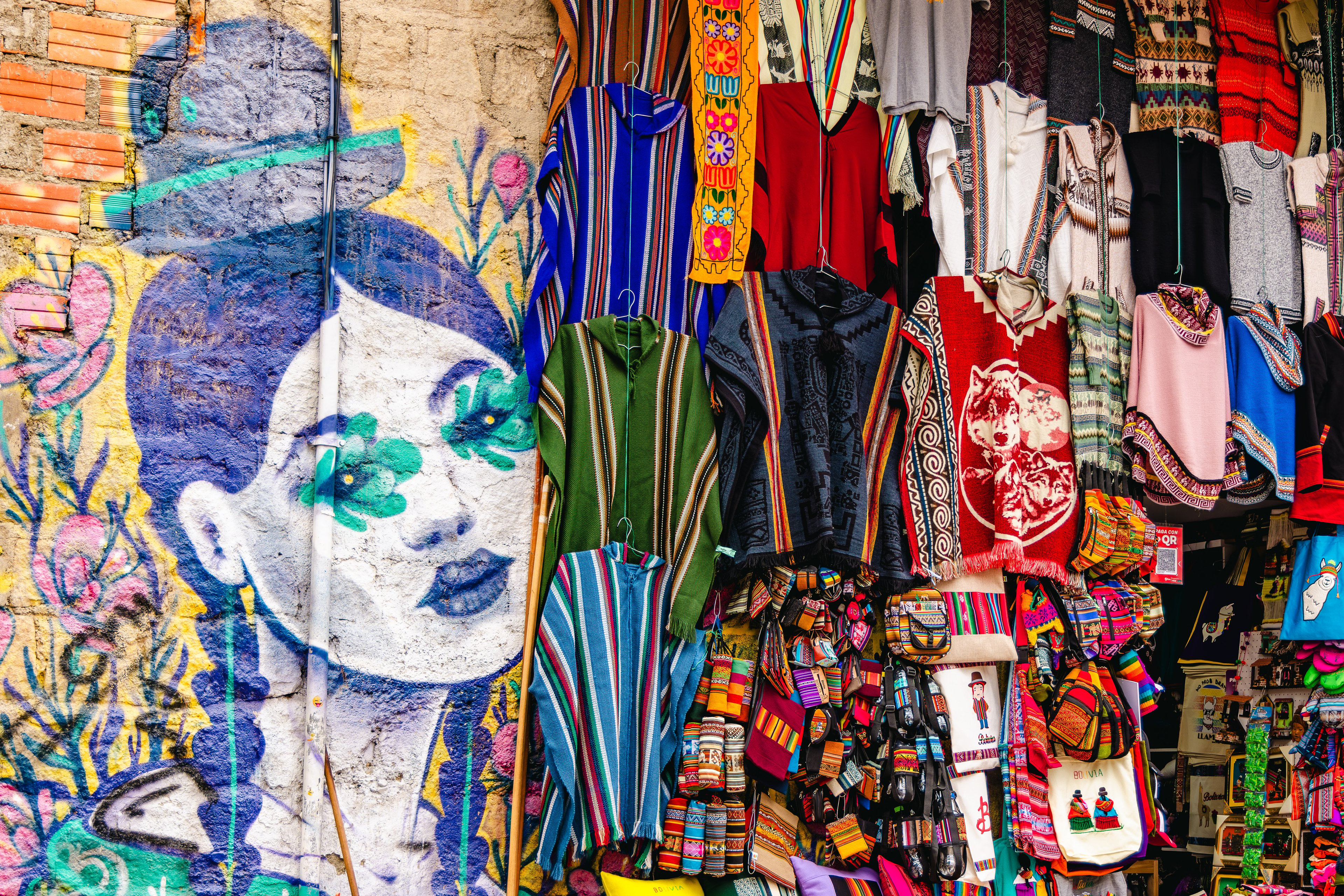
Get lost in a quirky maze of tangled streets full of vibrant textiles, indigenous cholitas with iconic bowler hats, and rustic brick facades in the capital city of Bolivia. La Paz offers travelers a hefty dose of adventure with mysterious witchcraft, extreme altitude, and diverse cuisine. Often overlooked by visitors in South America, this bustling atmosphere is worth a trip to experience a dose of culture at lofty heights!
Brad and I stayed in La Paz for one month to see several popular attractions including nearby Lake Titicaca and the archaeological site of Tiwanaku. The city was also an ideal base to launch our mini getaways in the surreal desert landscapes surrounding the Uyuni Salt Flats and Bolivian Amazon Rainforest to go birdwatching. Below I share a variety of noteworthy things to do, restaurants, and day trips to add to your itinerary.


Mi Teleférico
The best way to see the dramatic skyline of La Paz is by riding the affordable cable car system. At 3,650 m (11,975 ft) above sea level, the city needed a convenient way for people to navigate the steep hilly streets while reducing traffic congestion. Several lines, represented by different colors, dangle overhead transporting locals and tourists to distant neighborhoods and the adjacent city of El Alto.
Head to any Mi Teleférico station to buy a reloadable card or ticket to begin your journey. Each line requires its own fare, so calculate the total price beforehand. Route maps and abundant signs make planning your route a breeze. Even if you don't have a specific destination in mind, a cable car ride is a fun way to soak up picturesque views of puffy clouds, chock-a-block residences, and snow-capped mountains!


Mercado de las Brujas
A spellbinding place to understand Bolivian traditions and spiritual beliefs is at the Witches Market. Most families place a dried llama fetus under their house foundations for prosperity and to honor Pachamama. Lucky amulets, love potions, and dried frogs with cigarettes placed in their mouths for wealth can all be found in the dark rooms along Linares Street. Chifreras (Aymara women) sell most of the ritual products used by yatiris (healers) to create elixirs and sacred offerings.


There are plenty of other reasons to explore the Witches Market if you don't want to dabble in magic or fortune-telling. Vendors sell ornate ceramics, woven rugs, t-shirts, llama magnets, hats, silver jewelry, backpacks, and kitschy souvenirs in eye-catching shops. The photogenic pedestrian-friendly area is strikingly beautiful with eclectic garlands, large murals, and cozy cafés. Wander over to Sagarnaga Street if you want to buy a custom-made Patagonia fleece jacket, a tourist right of passage in Bolivia!


Basílica de San Francisco
Beginning in the 16th Century, Spanish missionaries spread Catholicism via coercion and cultural syncretism in South America. Many Bolivians now practice a hybrid religion of Christian practices and Andean spiritual traditions. For example, the Earth goddess Pachamama is frequently worshipped in tandem with the Virgin Mary. Todos Santos is a feast day commemorating both Catholic saints and deceased relatives.
The Basilica of San Francisco, completed in 1758, evokes the Mestizo Baroque style with its stone façade featuring tropical birds and chirimoyas (custard apples). Join a guided tour in the adjacent museum to see the rooftop with bell tower, crypt, and oil paintings depicting the life of Saint Francis. Opening hours are Monday-Saturday, 10:00 AM-5:00 PM, and tickets cost $5.80 USD per person.


Calle Jaén
Take a stroll along Jaén Street to discover colonial architecture, wrought-iron lamps, pastel hues, and artisan boutiques. The narrow cobblestone walkway is also a quaint place to learn about Bolivian history. Purchase an all-inclusive ticket for $2.90 USD at the Museo Costumbrista (period costumes and dioramas) to also check out the Museo de Metales Preciosos (pre-Colombian gold and Tiwanaku artifacts including the Fuente Magna bowl), Museo del Litoral (war memorabilia and maps), and Casa de Murillo (colonial home with antique furnishings). Unfortunately, photography is prohibited and opening hours are inconsistent.


Museo Nacional de Etnografía y Folklore
The eye-catching exhibits inside the National Museum of Ethnography and Folklore are extraordinary! The building, constructed in 1720, has a symmetrical stone entryway with whimsical arches, foliage motifs, and a central heraldic shield. Examine countless treasures such as ritualistic masks, ancient pottery, intricate weavings, colorful featherworks, regional clothing, and metalware. Opening hours are Monday-Friday, 8:30 AM-4:30 PM; Saturday, 8:30 AM-4:00 PM; and Sunday, 8:30 AM-1:30 PM. Tickets cost $5.07 USD per person.


Valle de la Luna
Traverse bizarre terrain while searching for cute bunny-like viscachas on the outskirts of La Paz. The Valley of the Moon is a geological formation full of eroded clay and rocky spires shaped by wind and rain. Keep an eye out for tiny lizards, purple flowers, and prickly cacti. The easy loop trail takes about an hour to finish. Brad and I rode a few colectivos (shared transportation) to complete the journey, but you could also head to the Mi Teleférico Irpavi station and grab a taxi to reach the main entrance. Opening hours are everyday, 9:00 AM-5:00 PM, and tickets cost $2.90 USD per person.


Restaurants
Fuel up with hearty Bolivian cuisine crafted with local ingredients. Spanish, Andean, and Amazonian influences meld together to create layers of flavor that will excite your taste buds. Traditional delicacies include salteñas (baked empanadas filled with meat and vegetables), api morado (sweet purple corn drink simmered with cinnamon and cloves), and sopa de maní (peanut soup). Below are my recommendations for a mouthwatering meal!
• Lunch - Pockets of comfort food and fresh juices await at Typica Café. Brad and I devoured many tantalizing beef and cheese empanadas with honey mustard dipping sauce during our stay. Pull up a seat at the outdoor bar at Santo Ramen Restaurante to enjoy a hot bowl of vegetarian ramen with chewy noodles, mushrooms, bok choy, and seaweed. The friendly service and ambience at both spots made us feel right at home.


• Dinner - Curate your own three-course meal at Manq'a Restaurante. The artistic plates of sopa de maní, slow-roasted keperi (beef) with cheesy rice, and chocolate raspberry mousse impressed us. La Rufina knows how to serve up a feast with its delicious relleno de papa (potato croquette), mild sopa de maní, fried trout, and paceño (vegetarian dish with potatoes, fried cheese, corn, and fava beans in a creamy chili sauce). The attentive staff also explained the cultural significance and components of each dish, which was a nice touch!


Day Trips
Ancient pre-Inca marvels and the largest freshwater lake in South America await just outside of La Paz! The following day trips are worth the effort if you have room in your itinerary. Brad and I hired a private taxi via Aerotaxi ($65 USD round-trip) to reach the archaeological sites of Tiwanaku and Puma Punku. I highly recommend a tour via Bolivia Hop to experience Lake Titicaca, Copacabana, and Isla del Sol.
Tiwanaku & Puma Punku
The ruins of Tiwanaku are full of geometric carvings, towering monoliths, and grand archways. Little is known about this lost civilization and its culture. The Puerta del Sol was carved from a single block of andesite and depicts the creator god Viracocha in the center flanked by low relief winged attendants. The protruding faces along the red sandstone walls of the Templete Semisubterráneo are uniquely strange. Don't miss the colossal H-blocks at Puma Punku, a mind-boggling feat of the past!


Lake Titicaca
According to legend, the birthplace of Viracocha and the Inca civilization was at Lake Titicaca. Eat a tasty grilled trout lunch with all of the fixings at Kiosco 12 in the quiet town of Copacabana before boarding a boat to Isla del Sol in the afternoon. Hike around the coast to see epic scenery, ancient ruins, grazing alpacas, and fountains. Pick up a souvenir, such as a mini reed boat, or sip a pisco sour at a rooftop bar before returning to La Paz.


Helpful Tips
La Paz is a safe city, but watch out for pickpockets in busy markets and streets. Uber isn't always reliable, so learn a few phrases in Spanish to help you negotiate a taxi fare. Even though bargaining is a common practice at souvenir stalls, Brad and I didn't partake because everything we bought was affordable. Cash is preferred in Bolivia and the best way to obtain local currency is at a reputable casa de cambio (currency exchange service). Rates fluctuate often, so do a bit of research beforehand to get the most bang for your buck!
Take it especially slow at the beginning of your trip to prevent altitude sickness. Drink a lot of water/electrolytes to avoid an emergency. Coca leaves, candy, and tea are useful remedies to combat symptoms such as shortness of breath, fatigue, headache, and nausea. Adjusting to the thin air is a gradual process, so don't be surprised if you find yourself huffing and puffing.


Final Thoughts
La Paz is a riveting place where you can truly mingle with Bolivian culture and kind locals. Every street corner, bountiful market, and fascinating attraction promises something new to discover. The straightforward city layout and laid-back vibes bring a wave of ease to help you focus on the risky altitude and present moment.
We almost skipped Bolivia, but I just couldn't forgo the chance to stand face to face with Viracocha at Tiwanaku or touch the H-blocks at Puma Punku. These once-in-a-lifetime travel moments brought joyful tears to my eyes. One of the greatest gifts you can give yourself is an enriching experience that shows you the world in a different light. So shake up your perspective and see what you'll behold in this underrated country in South America!
