
Rainforest Discovery Centre: Birdwatching in Borneo
Explore the canopy walkway and trails at the Rainforest Discovery Centre in Sepilok, Sabah, Malaysia, for the best birdwatching spot in Borneo.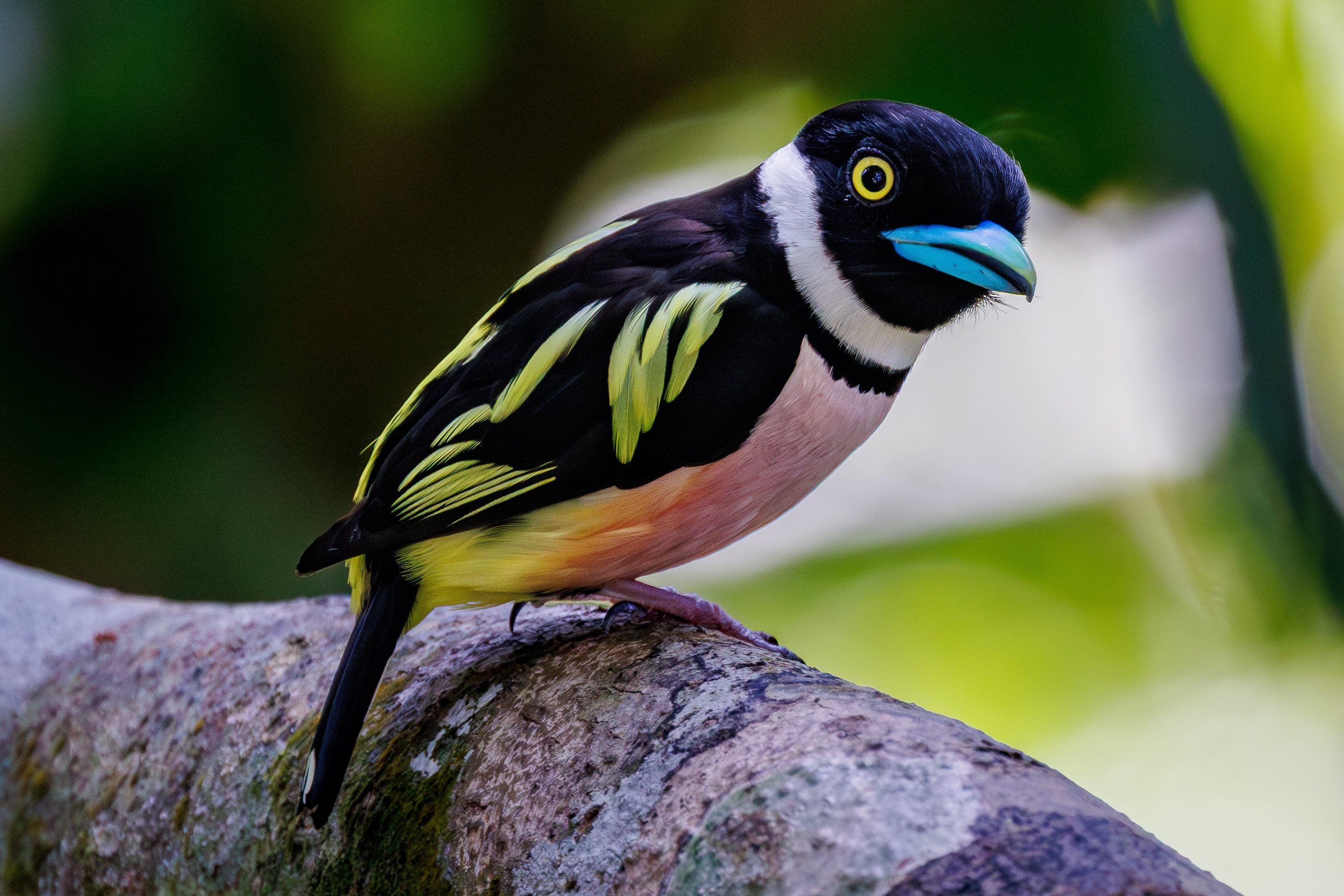
Nothing beats coming eye to eye with a rare bird singing in a misty canopy while rays of golden sunlight pierce through a towering ancient rainforest. All birdwatchers know the sudden sensory jolt as the heart quickens and excitement takes over. Every second seems agonizingly tense as you realize the slightest movement, even a routine blink, could end the one-of-a-kind encounter. Who knew a small bundle of feathers could completely steal the show?!


Red-bearded Bee-eater and Rhinoceros Hornbill
The island of Borneo in Southeast Asia is a treasure trove of colorful and bizarre birds with approximately 60 endemic species. Most travelers venture to the states of Sabah and Sarawak because of the established ecotourism infrastructure in Malaysia, even though Indonesia and Brunei also share the region. Beyond legendary birdwatching, visitors can hike Mount Kinabalu, go scuba diving around Sipadan Island, and cruise along the Kinabatangan River to spot the Borneo Big Five: the Pygmy Elephant, Rhinoceros Hornbill, Estuarine Crocodile, Proboscis Monkey, and Bornean Orangutan.


Oriental Bay Owl
Brad and I decided to split our week-long trip in Sabah between Sepilok and the Kinabatangan River. We dedicated two full days to birdwatching at the Rainforest Discovery Centre, including a guided night walk, to see as many animals and lifers as possible. Below I cover logistics, recommendations, and our sightings to help you prepare for an unforgettable excursion in this diverse preserve made for nature lovers!


Orange-bellied Flowerpecker and Collared Kingfisher
Rainforest Discovery Centre (RDC)
In 1996, the Rainforest Discovery Centre opened as a modest environmental education facility to help teachers show students the importance of ecosystems through hands-on activities, programs, and events. Located within the Kabili-Sepilok Forest Reserve, which spans roughly 10,611 acres (4,294 hectares) of virgin rainforest, the RDC has since expanded to include several well-maintained trails and interactive facilities such as the Plant Discovery Garden and Exhibition Hall.


Scorpion, Bornean Keeled Pit Viper, and Philippine Slow Loris
Completed in 2022, the 620 m (2,034 ft) long Rainforest Skywalk is undoubtedly the star attraction. Visitors can spot critters from 25 m (82 ft) above the ground on the metal canopy walkway or reach even greater heights on the three observation towers. The Rainforest Discovery Centre is an absolute haven for birdwatchers with over 300 identified species! In addition to birds, be on the lookout for Southern Pig-tailed Macaques, snakes, Bornean Orangutans, insects, and Red Giant Flying Squirrels.


Red Giant Flying Squirrel
Helpful Tips
The Rainforest Discovery Centre has a hot and equatorial climate with heavy tropical downpours throughout the year. High (dry) season runs between March-October and low (wet) season falls between November-February. Daytime temperatures can be brutal, especially with consistent high humidity. Prioritize athletic clothing and lightweight gear to stay comfortable. Protect yourself from the sun with a hat, sunglasses, and sunscreen. Consider a rain cover for your backpack or waterproof bag to safeguard your belongings and electronics. Don't forget to pack insect repellent for pesky mosquitos, flies, and ants!


Diard's Trogon
Keep your energy and hydration levels up with plenty of snacks and beverages. Plan to eat a delicious curry lunch at the on-site Keruing Cafe, which also has coconuts, ice cream, cold drinks, and fresh vegetable/fruit juices. The al fresco restaurant has a covered balcony with fans and adjacent bathrooms. Please take out what you take in and leave no trace, including biodegradable food which can harm wildlife.


Black-and-red Broadbill and Little Green Pigeons
Transportation Options
The Rainforest Discovery Centre is located in the village of Sepilok, a popular hub where tourists can also visit the Sepilok Orangutan Rehabilitation Centre and Bornean Sun Bear Conservation Centre. I highly recommend adding both to your itinerary for a chance to see endangered Bornean Orangutans and Bornean Sun Bears up close! Brad and I walked to all three attractions from our quiet resort in Sepilok to take advantage of the roads for extra birdwatching. If you choose to stay in nearby Sandakan or prefer a lift, affordable Grab rides (similar to Uber/Lyft) are readily available.


Bornean Orangutans and Bornean Sun Bear
What to Expect Upon Arrival
The Rainforest Discovery Centre is open every day, 8:00 AM-5:00 PM, including public holidays. Tickets cost $7.50 USD per person via cash only. If you purchase tickets the day before, it's possible to arrive as early as 6:00 AM. Security guards may verify your purchase. Visitors who reserve a slot for the guided night walk can stay until 6:00 PM (group meeting time). Tickets cost $13 USD per person via cash only. Bring enough local currency since credit cards are not accepted.


Asian Palm Civet and Stork-billed Kingfisher
A paper map is provided upon entry, but helpful signs scattered along the trails also make navigation a breeze. Plenty of benches line the paths to rest your feet and admire the native flora and fauna. Bathrooms are located near the Bulbul Shelter, Keruing Cafe, and Birders Rest. Bring some toilet paper and hand sanitizer just in case. Unfortunately, binoculars are not available to rent so plan accordingly.


Black Hornbill
Self-Guided or Guided Tours
Luckily, crowds are scarce at the Rainforest Discovery Centre since many travelers on a tight schedule rush through Sepilok only to visit the Sepilok Orangutan Rehabilitation Centre and Bornean Sun Bear Conservation Centre. Brad and I love a challenge and sometimes opt to go birdwatching without a guide. While we are far from professionals, we identified over 30 species at the RDC!


Long-billed Spiderhunter, White-breasted Woodswallow, and Common Iora
Birds are masters of hide-and-seek and it can be difficult to spot them in the dense foliage. Prepare beforehand by downloading the Merlin Bird ID app by the Cornell Lab of Ornithology which recognizes over 2,066 bird species by sound. Install the Borneo bird pack to help keep track of your encounters. The app is easy to use and takes birdwatching to another level.
If you would like to have a pair of trained eyes by your side, book a multi-day birdwatching expedition or private/group tour well in advance. Local guides are a worthwhile resource because they know migratory patterns, common species, food sources, and behavioral patterns. Typically, guides carry spotting scopes, laser pointers, and binoculars to assist participants. You're guaranteed to learn or find something new with an expert!


Crimson Sunbird
Bird Species
Did you know Sabah boasts over 600 resident and migratory bird species? Simply mind-blowing! The Rainforest Discovery Centre has several placards with photographs of frequent birds at certain trail points to help visitors get a sense of potential encounters. Each trail has a particular topography and habitat ideal for specific birds. For example, Brad and I spotted a Red-bearded Bee-eater, Black-and-red Broadbill, and Greater Racket-tailed Drongo along the Kingfisher Trail. We saw and heard several Rhinoceros, Black, and Oriental Pied Hornbills at the 27 m (89 ft) high Hornbill Tower.


Lesser Green Leafbird and Brown-throated Sunbird
Stork-billed and Collared Kingfishers, Oriental Darters, and gliding Bartlett's Flying Dragons are practically guaranteed at the Jetty and Lakeside Pavilion. The dinosaur-like Bornean Bristlehead sometimes makes an appearance at dawn around the Bristlehead Tower. The Rainforest Skywalk was the most bountiful with a Lesser Green Leafbird, Blue-throated Bee-eater, Verditer Flycatcher, Bronzed Drongo, Indian Cuckoo, Black-and-yellow Broadbill, and pair of Asian Glossy Starlings.


Oriental Pied Hornbill, Little Spiderhunter, and Bronzed Drongo
Don't speed past the Main Entrance and its abundant flowering trees! Brad and I caught glimpses of a Crimson Sunbird, pair of Little Green Pigeons, Brown-throated Sunbird, Little Spiderhunter, Orange-bellied Flowerpecker, Long-billed Spiderhunter, Chestnut Munia, and Common Iora. A Narcissus Flycatcher perched at the Birders Rest was an unexpected bonus for us due to its skittish behavior. I was thrilled to see a hunting Oriental Bay Owl and sleepy Diard's Trogon during our guided night walk!


Bartlett's Flying Dragon, Narcissus Flycatcher, and dragonfly
Photography
Brad and I put our Canon 100-500 mm telephoto lens to the test at the Rainforest Discovery Centre. The built-in autofocus and animal tracking systems in our Canon EOS R5 camera helped us capture some amazing action shots. A high shutter speed with burst mode came in handy for the hyperactive birds. Consider bringing a tripod, especially if you want to record videos or stabilize your camera. A telephoto lens is a must-have if you want to score satisfying results. Clear pictures of dazzling species are always the ultimate souvenirs of any birdwatching quest!
Wildlife is unpredictable, which makes birdwatching such a rewarding hobby. Try to stay positive if the tropical weather conditions turn sour. Bouts of rain and fog come with the territory, but often don't last long. A successful day in the woods takes a bit of patience and luck. Keep your eyes peeled and your head on a swivel.


Oriental Darter
Final Thoughts
Curating a trip to discover a sliver of one of the oldest rainforests on the planet is a bucket list experience for any wildlife enthusiast. Both amateur and professional birdwatchers flock to the Rainforest Discovery Centre to marvel at the impressive avian beauty of Borneo. The peaceful trails, tourist-friendly facilities, and elevated canopy walkway create a paradise where visitors can enjoy nature without being intrusive. However you plan your adventure on the island of Borneo, be sure to put this standout attraction in Sepilok at the top of your itinerary!
